Embossed Business Card Cost: Two Methods, One Trade-Off
Embossed business card cost comes down to which of two production methods you choose.
Method 1 prints the card at standard size and embosses after trimming, which is cheaper but leaves the emboss position slightly open to movement.
Method 2 custom-runs the job so the emboss happens before trimming, which is the most accurate but costs considerably more.
We get asked about embossed business card cost most often right after a customer sees a quote and finds it higher than expected. The emboss itself is rarely the reason. What drives the price is the order the two processes run in, and how much tolerance that order leaves behind.
The two methods at a glance
Both methods produce the same raised effect. They differ in process order, accuracy, and embossed business card cost.
| Method 1 | Method 2 | |
|---|---|---|
Process order | Print, trim, emboss | Print, emboss, then trim |
Accuracy | Good, position can shift slightly | Highest, position stays consistent |
Cost | Lower | Higher: custom run, higher fixed cost and wastage |
Typical use | Most popular for cost effective | Jobs need the emboss position in high accuracy |

Method 1: print at standard size, then emboss
This is the common route. We print your card at a standard size in gang printing, trim it to its finished dimensions, then run the emboss.
Trimming carries a tolerance of about 1mm. The embossing step carries another 1mm of its own. Those two tolerances sit on top of each other.
That is what keeps embossed business card cost down, and it is why this method is popular. The trade-off is accuracy. Because the trim position can vary a little, the position of your logo relative to the card edge can vary with it. When the emboss is aligned to the artwork, that small shift carries through. This method is best for embossing that does not need to match the artwork. The outcome is elegant, and it saves cost. On a design with normal margins you will not see the shift. On a logo sitting tight to the edge, you might.
Method 2: custom run, emboss before trim
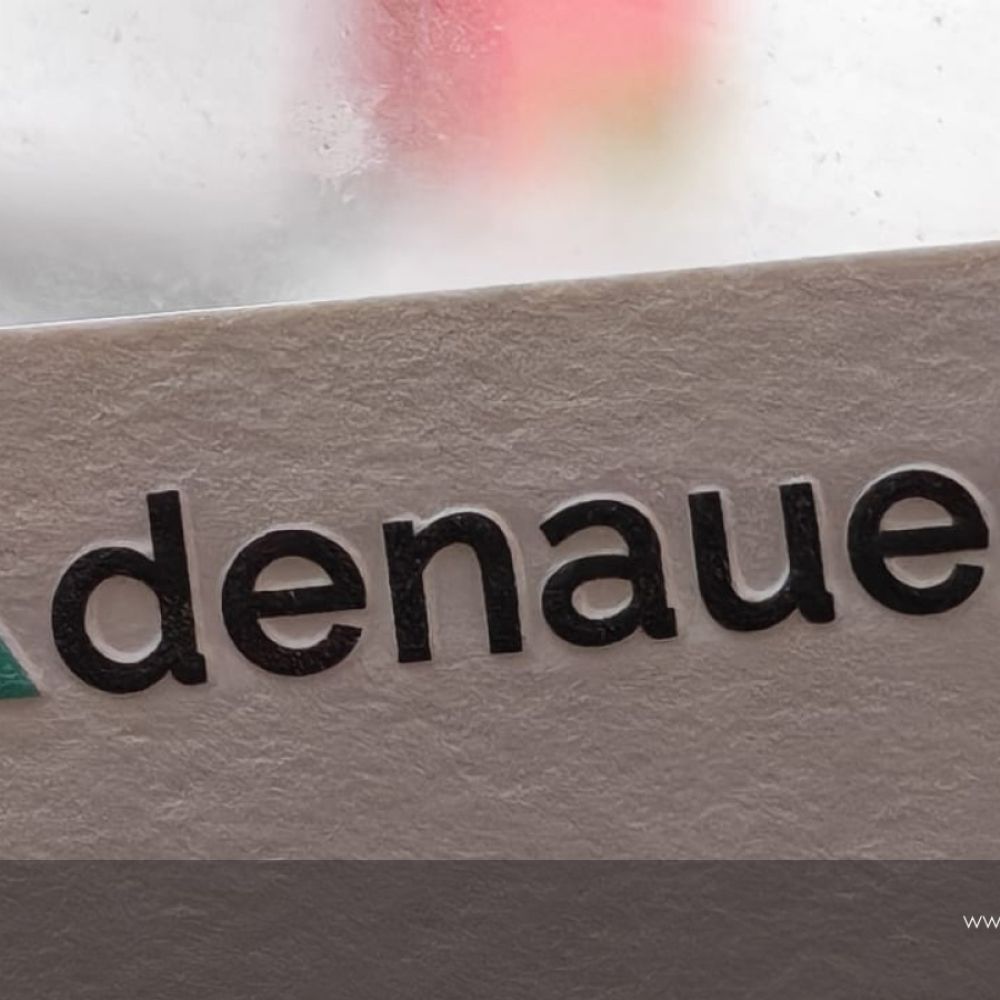
For this method we custom-run the printing job. The emboss is applied first, and the trimming happens afterwards.
Because the emboss is in place before the cards are cut, the printing and the emboss refer to the same corner. The position stays consistent across the whole run, and the emboss lands where the design intended every time.
This is the high accuracy method, if it is required. We are able to fulfil the high accuracy requirement by changing the process flow. The cost is higher, though. A custom run carries higher fixed costs and more wastage, so the price can land around three to four times method 1. That gap is widest at small quantities. As the quantity rises, the fixed cost spreads across more cards, and the gap in embossed business card cost narrows.
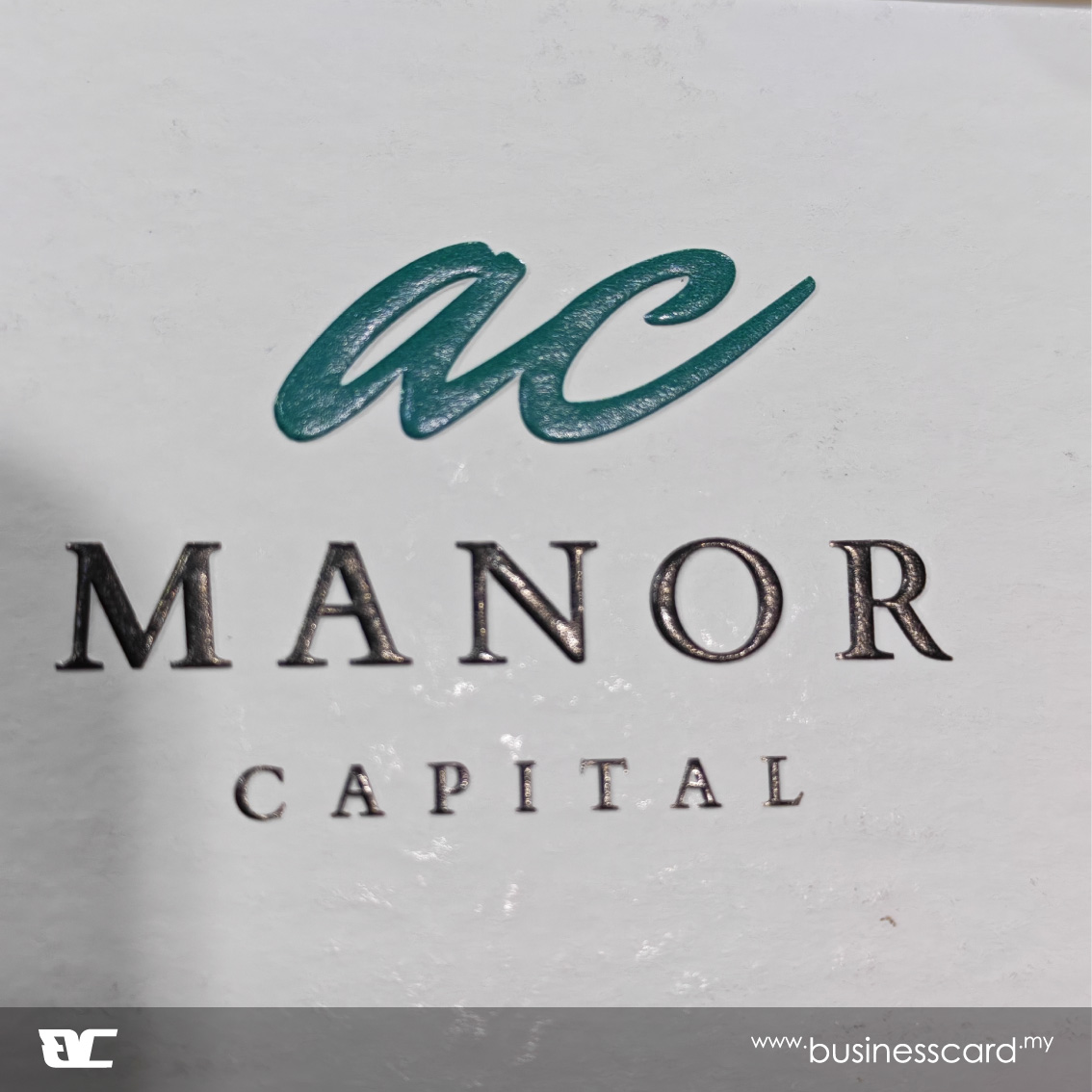
This is a custom run we printed
Every card photographed in this article is a real job we printed at BCMY, not a mock-up. This one is a custom run: the emboss went on before the trim, so the logo and the impression line up exactly, card after card.
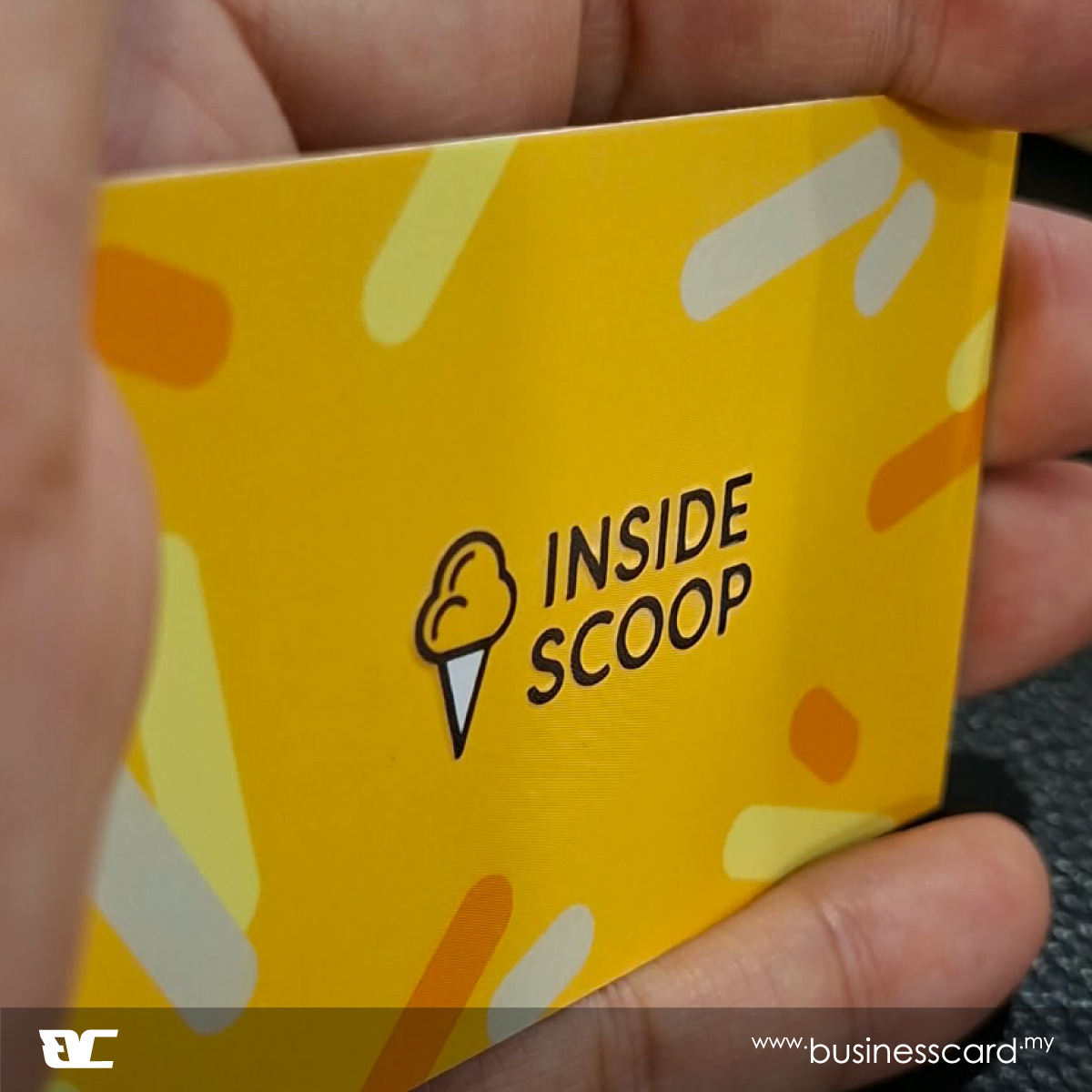
Why embossed business card cost is never one fixed number
We deliberately avoid quoting a single multiplier, because the real figure moves with the job. Three things change the process flow, and each one changes the fixed cost with it:
- Material: different stocks take the die differently and may need a different setup
- Emboss position: where the emboss sits affects how the die is aligned and run
- Emboss size: a larger embossed area needs more pressure and closer control
Change any one of those and the setup changes with it. That is why embossed business card cost can differ noticeably between two jobs of the same quantity. Treat “three to four times” as a description of the shape of the difference, not as a quote.

Which method do most customers choose?
Method 1. Most of our customers take the standard route and are happy with the finished card. The tolerance is small, and for most designs it is acceptable.
Method 2 is for the jobs where it matters. A logo placed close to the edge. A fine emboss that has to line up with printed artwork. A large run where holding the same position across thousands of cards is the whole point.
If you are unsure which one your design needs, send us the artwork and we will tell you honestly whether method 1 will hold it.
Frequently asked questions
For most people, yes. It depends on the expectation. Most people can tolerate the small offset between the printing and the emboss, but some want it to be touch perfect. It becomes a real consideration only when accuracy is the priority over cost.
You can, but the fixed cost and the wastage are spread across fewer cards, so the per-card price is at its highest. This is where the gap in embossed business card cost is widest.
It can change the process flow, and the process flow changes the cost. Cotton-mix and textured stocks take an emboss differently from a coated art card. Tell us the stock you have in mind and we will confirm what it needs.
Because the fixed cost depends on the material, the position and the size of the emboss. Those three decide the process flow, and the process flow decides the price. Send the design and we can price it properly. Or you may refer to our BCMY Curated Collection, where the emboss card is already packaged as a standard item.
Wrap up
Embossed business card cost is really a question about process order. Method 1 prints and trims first, then embosses. It is cheaper and it satisfies most orders. Method 2 prints, embosses, then trims, which holds the position exactly, at a higher fixed cost that eases as the quantity rises.
If your logo sits tight to the edge, or the emboss has to line up precisely, say so when you send the artwork. That one detail decides which method we run. You can see the stock we emboss most often on our cotton mix emboss business cards page, and the wider range on our emboss and deboss business cards page. For the general technique, paper embossing is a useful primer.